Why “More Review” Isn’t the Answer
The instinctive response to this pressure is to increase review time. Add another check. Add another set of eyes. More time and more margin. But manual review doesn’t scale linearly with project complexity. As drawing sets grow, so does cognitive load. AEC professionals spend more time hunting for inconsistencies than assessing their impact and in the long rn it isn’t sustainable. More red lines don’t solve the underlying issue: the difficulty of maintaining structural consistency across evolving drawing sets and conducting review under time pressure.
Why Generic AI Hasn’t Closed the Gap
It’s reasonable to assume that AI should help here, especially as here seems to be an a that can solve anything. The truth is it can’t. But most “AI for drawing review” tools rely on general-purpose models that treat drawings as static images. They can do the basics, like resize them, or compress them as well as strip them of structural relationships. The problem is that once structure is lost, QA/QC becomes unreliable.
Automated drawing review only works if the system understands drawings as structured, multimodal documents, not as flattened PDFs. This is why many early attempts at automation have failed to gain trust. Without those, automation becomes guesswork.
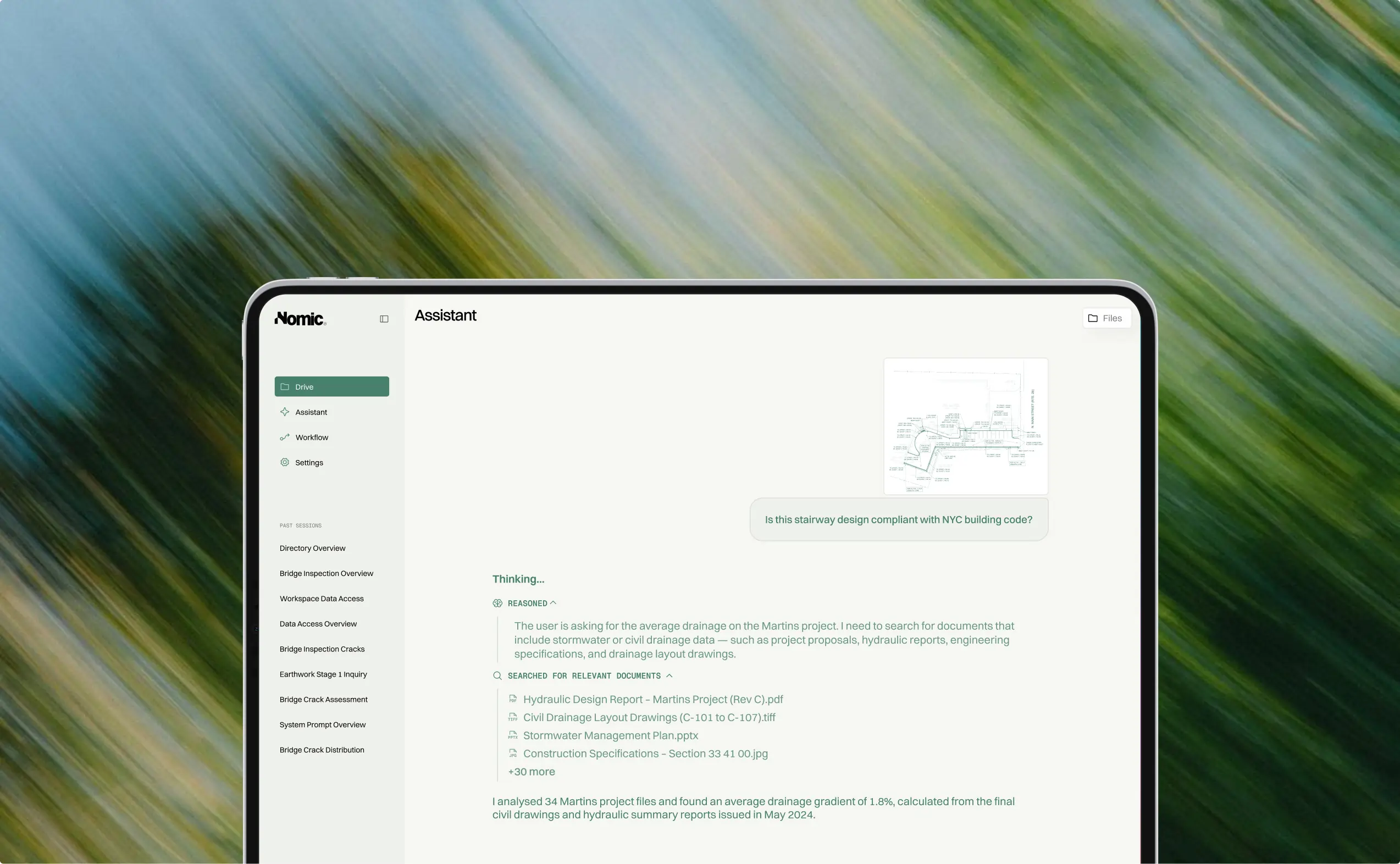
What is needed Automated drawing review requires domain-specific, multimodal AI that can interpret drawings structurally, preserving layout, geometry, tables, and cross-sheet relationships, rather than compressing them into simplified images.
When drawing review is supported by domain-specific AI that can interpret layout, geometry, tabular data, and cross-sheet relationships at full resolution, the nature of QA/QC shifts.
There is a shift from finding issues to validating surfaced issues. That shift has practical consequences. Manual drawing set consistency checks that might take 10 hours can be reduced to closer to 2, not because review is eliminated, but because information is structured. The benefit isn’t just speed, it’s focus. It’s the ability to redirect experienced AEC professional’s time toward higher-value judgement rather than document hunting.
Drawing review is not an internal administrative exercise , it directly shapes RFI volume, change orders, programme certainty, client trust, and ultimately margin protection. When inconsistencies are surfaced early and QA/QC is structured rather than reactive, rework reduces, predictability increases, and firms gain a competitive advantage built not on speed alone, but on delivering with fewer surprises.
Another misconception is that drawing review automation applies only to final drawing sets. In reality, QA/QC happens continuously. Design is iterative. Coordination is iterative. Compliance is iterative. The ability to run structured drawing consistency checks on partial, evolving, or incomplete sets, not just polished IFC packages. reflects how projects actually unfold. Most AI tools can only offer surface level value and legacy tools assume drawings are finished yet modern projects rarely are.
Unknown block type "image", specify a component for it in the `components.types` option
From Manual Safeguard to Strategic Capability
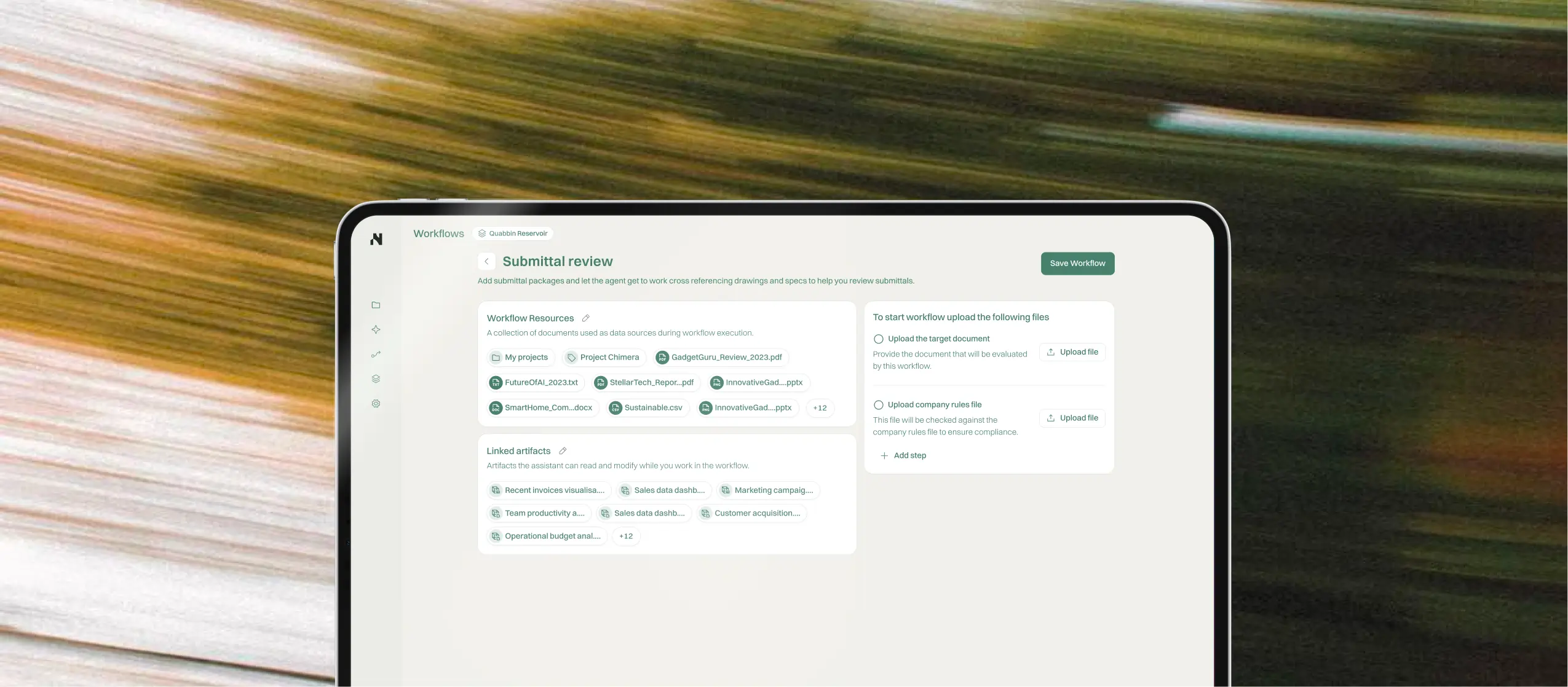
Automated drawing review, when grounded in domain-specific document understanding, shifts QA from a reactive red-line exercise to a structured control system. By comparing versions, identifying cross-sheet inconsistencies, and surfacing potential coordination issues before manual review begins, it transforms quality assurance into a repeatable operational capability.
This enables firms to:
- Maintain drawing-set consistency across distributed teams and disciplines
- Scale review workflows without proportionally increasing red-line hours
- Reduce dependency on individual recall to maintain relational accuracy
- Detect coordination risks earlier in the revision cycle
The advantage isn’t merely operational efficiency. It is structural resilience, the ability to maintain documentation integrity at scale, across revisions, without increasing cognitive burden on technical teams. That is what turns automated drawing review from a productivity tool into a strategic capability.
The Shift Ahead
Automated drawing review is not about replacing professional judgement. It is about reducing the friction that surrounds it.
When drawings can be read structurally and consistently across revisions, QA/QC becomes proactive instead of reactive. Review cycles compress. Rework decreases. Engineering time is applied where it adds the most value.
In a market where margins are tight and complexity is rising, relying on manual QA/QC alone is becoming increasingly difficult to justify.
The firms that adapt won’t eliminate review. They’ll structure it.
Explore the Automated Drawing Review use case here.