


Revit
Building information modelling software
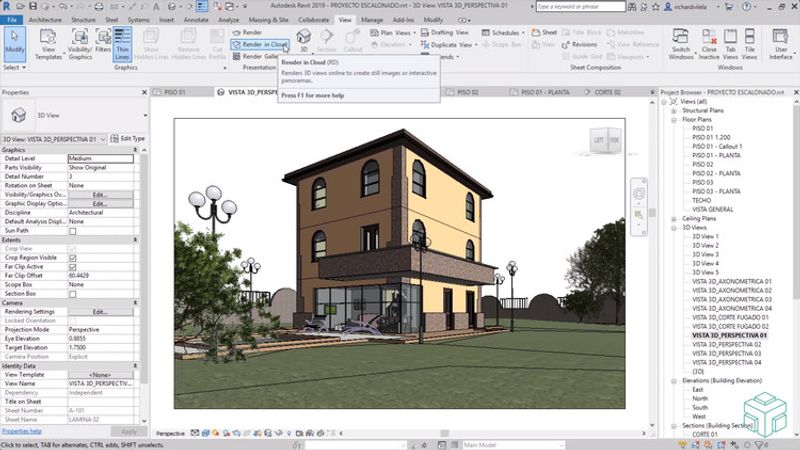
Definition
Revit is a Building Information Modeling (BIM) software developed by Autodesk, widely used across architecture, engineering, and construction disciplines. It allows users to design, model, and document buildings and infrastructure in a single, coordinated environment. In Revit, every element in a project is part of an interconnected database. Changes made to one view—such as a plan, elevation, or section—are automatically reflected in all other views of the model. This parametric relationship ensures consistency and reduces the risk of errors in documentation. Core Capabilities Revit supports both 2D drafting and 3D modeling, but its primary strength lies in its data-rich modeling environment. Each object in Revit is not just geometry; it carries information about its physical properties, materials, and relationships to other components. Revit includes tools for architectural design, structural engineering, and MEP (mechanical, electrical, plumbing) systems, enabling multiple disciplin
In Depth
Revit by Autodesk is the dominant BIM platform for building design — used by architects, structural engineers, and MEP engineers for 3D modeling, documentation, and analysis. AI integration with Revit brings compliance checking, model validation, and design intelligence directly into the Revit workflow, enabling real-time code analysis and automated QC checking as the design develops.
Tool Details
3 years for 1 user (pay annually)
1 year (most popular)
1 month
More than 30 days
United States
Examples
It allows users to design, model, and document buildings and infrastructure in a single, coordinated environment
Core Capabilities Revit supports both 2D drafting and 3D modeling, but its primary strength lies in its data-rich modeling environment
The software also allows for the creation of schedules, material takeoffs, and detailed construction documentation directly from the model
Nomic Use Cases
See how Nomic applies this in production AEC workflows:
Frequently Asked Questions
Revit is a Building Information Modeling (BIM) software developed by Autodesk, widely used across architecture, engineering, and construction disciplines. It allows users to design, model, and document buildings and infrastructure in a single, coordinated environment. In Revit, every element in a project is part of an interconnected database. Changes made to one view—such as a plan, elevation, or section—are automatically reflected in all other views of the model. This parametric relationship ensures consistency and reduces the risk of errors in documentation. Core Capabilities Revit supports both 2D drafting and 3D modeling, but its primary strength lies in its data-rich modeling environment. Each object in Revit is not just geometry; it carries information about its physical properties, materials, and relationships to other components. Revit includes tools for architectural design, structural engineering, and MEP (mechanical, electrical, plumbing) systems, enabling multiple disciplin
It allows users to design, model, and document buildings and infrastructure in a single, coordinated environment. Core Capabilities Revit supports both 2D drafting and 3D modeling, but its primary strength lies in its data-rich modeling environment. The software also allows for the creation of schedules, material takeoffs, and detailed construction documentation directly from the model.
Project Research: Instantly access all project-critical information from a single search interface. Automated Drawing Review: Automatically review drawings against building codes, internal standards, and client requirements.